Sources & references
Numyra draws on primary historical texts, modern scholarship, and named technical data sources: never anonymous “studies show” claims.
Where to find sources for a specific page
Every calculator and article lists its own sources at the bottom of the page, linked to a real accessible copy wherever one exists (Internet Archive, Perseus Digital Library, a publisher or DOI page). The full current bibliography for our numerology and astrology methodology lives on the Methodology page.
Categories of sources we use
- Ancient and primary texts: e.g. Aristotle’s Metaphysics, Ptolemy’s Tetrabiblos: for how these traditions were originally described.
- Early modern popularizers: e.g. L. Dow Balliett, Cheiro: for the specific systems (letter charts, master numbers) most calculators in this niche still use today.
- Academic scholarship: e.g. Burkert, Dudley, Rochberg, Campion: for historical context and critical distance from the traditions themselves.
- Technical/scientific data: e.g. the Swiss Ephemeris, the IANA time zone database: for anything astronomical a birth chart calculation depends on.
Data sets behind our numbers
Whenever a page gives a percentage, a rarity or an exact date, it comes from one of these named sources, processed by the Numyra Methodology Desk with the method described on that page.
- Swiss Ephemeris (Astrodienst): planetary positions, sign ingresses, retrograde stations and every exact date and time we publish.
- US births, 1994–2014 (FiveThirtyEight, compiled from the CDC National Center for Health Statistics and the Social Security Administration): 85.4 million births, used for every “how common” figure based on birth dates.
- US Bureau of Transportation Statistics on-time performance records: the 52.4 million flights in our Mercury retrograde test.
- Social Security Administration baby names and the US Census Bureau 2000 surnames: the 200,000 simulated full names behind our name-number statistics.
- NASA planetary fact sheets and NASA eclipse pages: orbits, distances and eclipse cycles.
- Paul Schlyter, How to Compute Planetary Positions: the method our in-browser calculators use, tested against the Swiss Ephemeris.
- IANA time zone database: historical time zones and daylight saving time for birth times.
- DataGenetics PIN analysis (2012): the 3.4 million four-digit codes behind our angel-number lookup’s PIN statistics.
Primary texts we quote
When a page quotes an old authority, the quotation comes from a scan or a public-domain edition that you can open yourself:
- Ptolemy, Tetrabiblos: the J. M. Ashmand translation (1822) and the F. E. Robbins Loeb translation (1940) on LacusCurtius.
- William Lilly, Christian Astrology (1647), quoted with page numbers from the scan.
- Manilius, The Five Books of M. Manilius (1697 English edition).
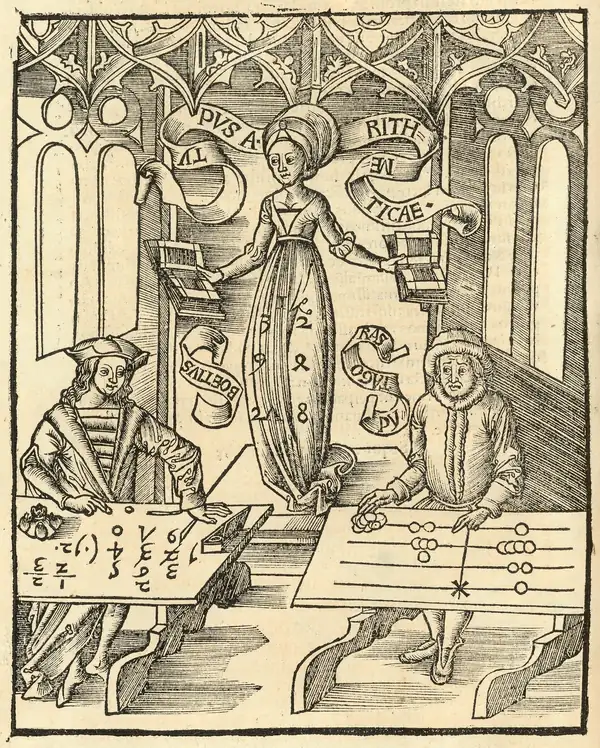
- Nicomachus of Gerasa, Introduction to Arithmetic, and Philo of Alexandria, Works, for ancient number symbolism.
- L. Dow Balliett, The Philosophy of Numbers, and Cheiro, Cheiro’s Book of Numbers, for the systems most modern numerology calculators use.
- Ronald C. Davison, Synastry, and Robert Hand, Planets in Composite, for relationship astrology.
Something missing or wrong?
If a citation looks incorrect or you can’t find a source for a specific claim, tell us at mynumyrasupport@gmail.com and we’ll check it.