Every numerology site that mentions Cheiro repeats the same story: a mysterious Irish palmist who read Mark Twain’s hand and predicted his own death. Almost none of them check that story against the documented record. We did — and the gap between what Cheiro claimed about himself and what can actually be verified is, itself, part of the real history of modern numerology.
Key takeaways
- Cheiro was born William John Warner in Dublin in 1866. The “Count Louis Hamon” title and Norman noble lineage he’s known by came later — sources genuinely disagree on whether it was inherited or self-adopted, which is itself telling about how thin the documentation is.
- His real, verifiable client list (via his own visitor’s book) and two real court/press records from 1936 and 1942 are more solidly documented than the mystical origin story usually told about him.
- What actually survives of his work today isn’t the palmistry he was famous for in his lifetime — it’s the specific letter-to-number chart still used in modern Chaldean numerology, including on this site’s own calculators.
- Nothing here is an accusation of fraud — it’s a documented-record-vs-legend comparison, the same honest treatment we give any historical source.
In this guide
- What’s actually documented
- The title that sources can’t agree on
- The India origin story
- The predictions his reputation rests on
- Two real, dated records
- His actual published work
- What a skeptical assessment actually says
- Cheiro and his contemporaries
- What actually survives today
- Frequently asked questions
What’s actually documented
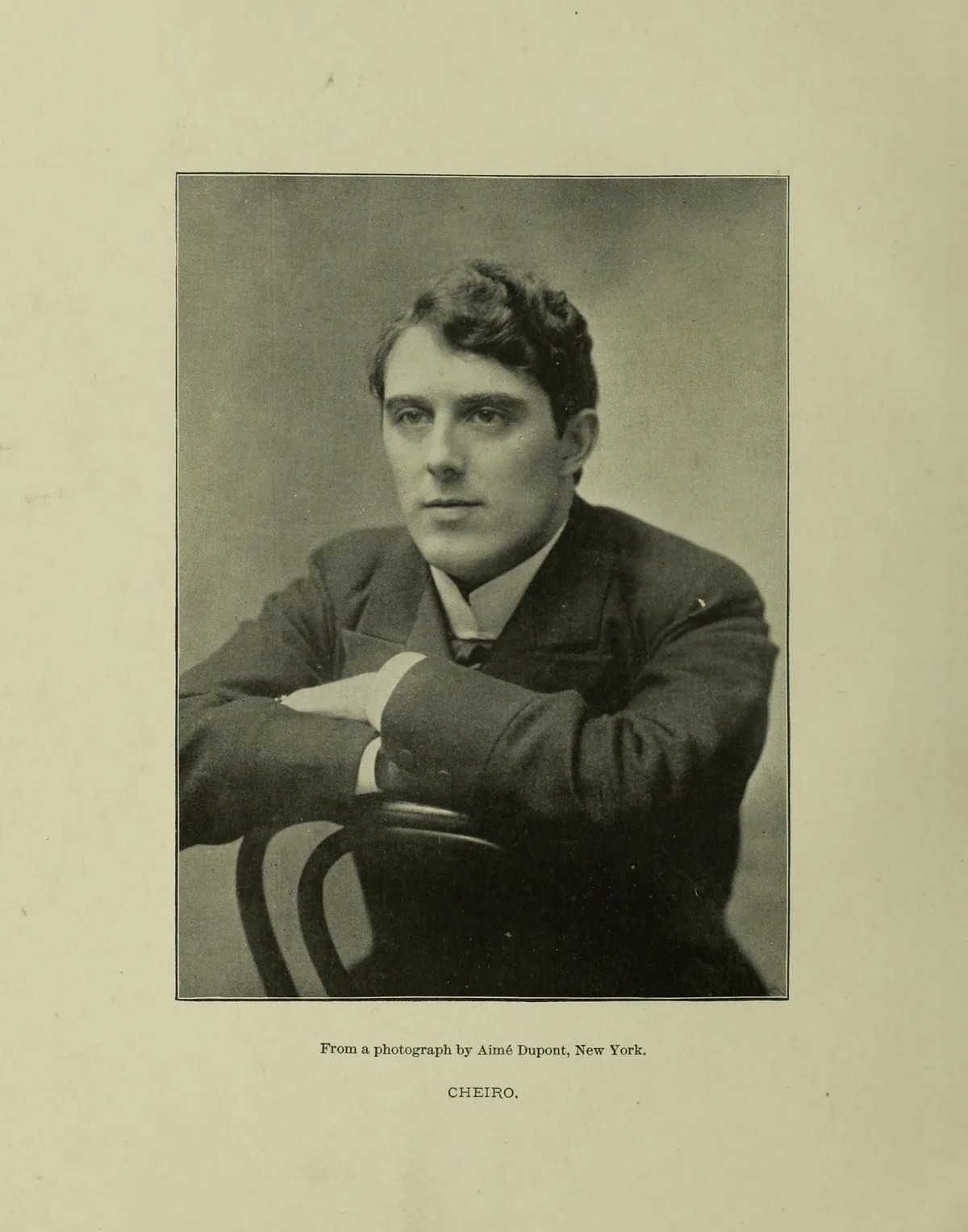
Cheiro was born William John Warner on November 1, 1866, in Dublin, Ireland, and died on October 8, 1936, in Hollywood, California, at age 69. His stage name comes from “cheiromancy,” an older word for palmistry. By the 1890s he had a genuinely real, documented international reputation as a society palmist, with a visitor’s book of client testimonials that reportedly included Mark Twain, Oscar Wilde, Sarah Bernhardt, Thomas Edison, the Prince of Wales, and W. E. Gladstone. That client list is real in the sense that it’s widely repeated across sources — though it’s worth noting the visitor’s book itself was his own evidence, not an independently verified record.
The title that sources can’t agree on
Here’s where the record gets genuinely thin, and where we want to be honest about a real disagreement between sources rather than pick one silently. Cheiro is commonly known as “Count Louis Hamon,” claiming descent from the Hamons of Normandy and, in some tellings, from a companion of William the Conqueror. One source describes this lineage as something Warner invented himself and “self-identified” into — no independent documentation of the nobility exists. A separate source instead describes the title as inherited from his father, “Count William de Hamon.” Two real reference sources, two different accounts of where the title actually came from. We’re not going to resolve that disagreement by picking whichever version sounds better — we’re naming it as an open question, which is itself the honest answer.
The India origin story
The story usually told is that Cheiro traveled to India as a teenager, met a Brahmin guru near Bombay, and learned palmistry, astrology, and Chaldean numerology directly from that teacher. This is the account Cheiro himself gave, and it’s the version every numerology site repeats. We haven’t found independent documentation of the trip, the teacher, or the specific system transmitted — which doesn’t mean it didn’t happen, only that it rests entirely on Cheiro’s own telling, the same way the Count title does.
The predictions his reputation rests on
Two specific predictions are most often cited as evidence of his ability: that the Prince of Wales (later Edward VIII) would eventually abdicate for love, and that the Jewish people would one day return to a homeland in Palestine. Both did, in a sense, come to pass — Edward VIII abdicated in 1936 to marry Wallis Simpson, and Israel was established in 1948. Worth being clear about what we can and can’t verify here: we haven’t found a contemporary, independently dated record of either prediction being made publicly before the events they supposedly foretold — both come down to Cheiro’s own later retellings and the retellings of others repeating him, the same pattern as the India origin story and the Count title. A broad, symbolic prediction like “a prince may choose love over a throne” or “Jewish people will return to their homeland” was also not a wholly novel idea in the political conversation of his era — general enough, and made by enough people in various forms, that a truly independent verification of timing and specificity would matter a great deal here, and we don’t have one.
Two real, dated records
Away from the legend, two specific, dated, independently verifiable records exist:
- Time magazine, October 19, 1936 — his obituary, published in the “Milestones” section days after his death, noted he had accumulated roughly a quarter of a million dollars from his clientele of wealthy women over his career.
- The New York Times, October 30, 1942 — six years after his death, a report on his widow going to court to annul his second marriage, since his first marriage had apparently never been formally dissolved.
Neither of these is a “gotcha” — a successful, wealthy palmist and a messy personal life aren’t unusual on their own. What’s notable is the contrast: the mystical origin story is entirely self-sourced, while these two mundane, unflattering-adjacent facts are the parts of his life that show up in independent press records.
His actual published work
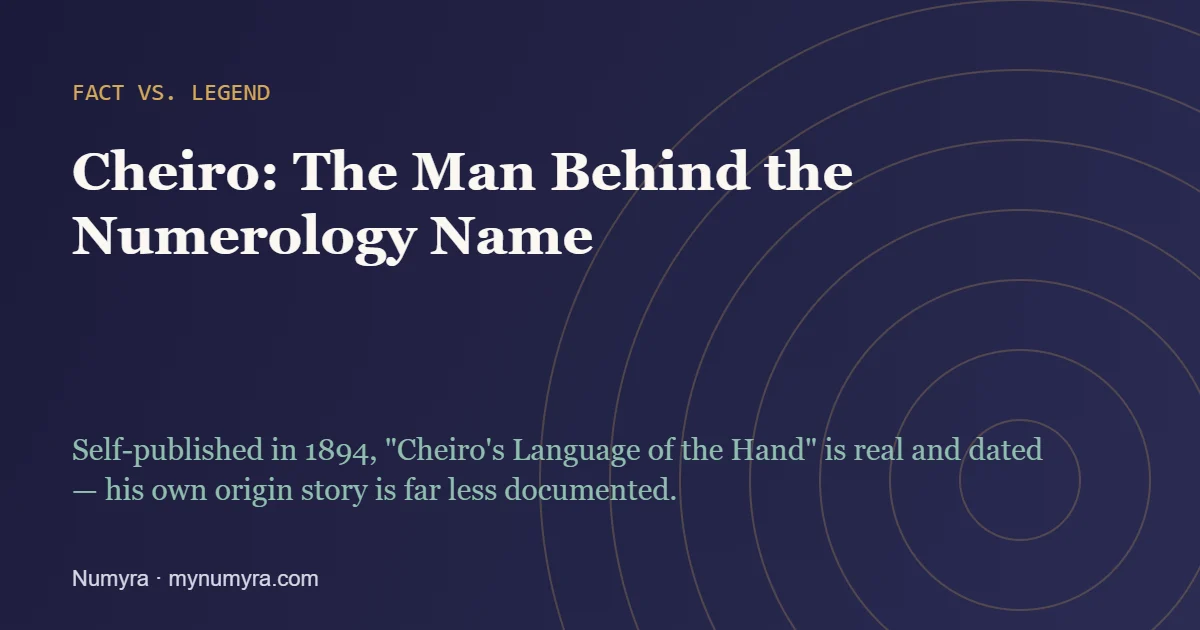
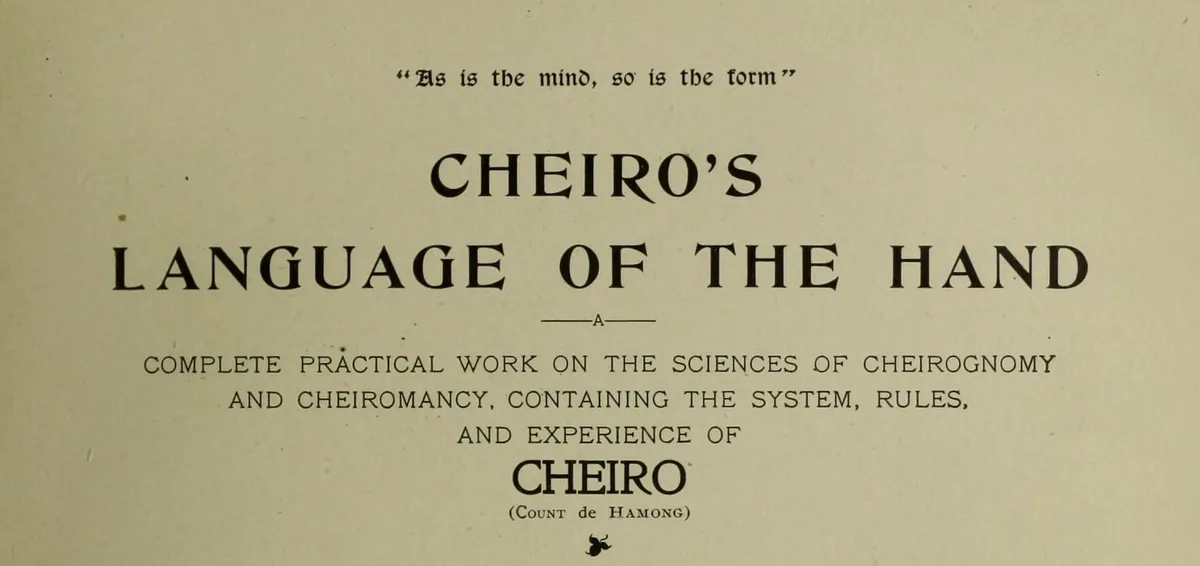
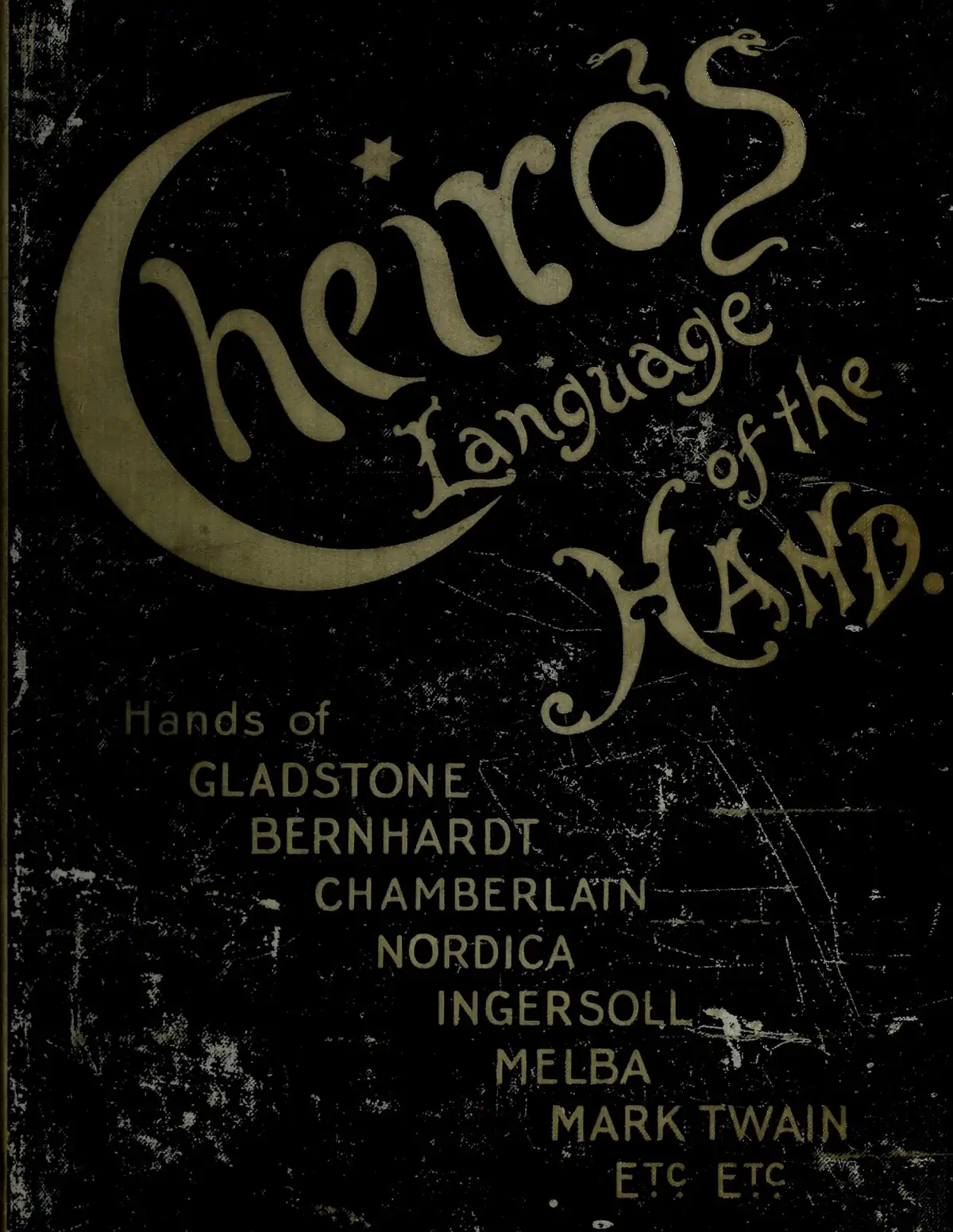
Whatever the true origin of his knowledge, Cheiro’s written output is real, dated, and independently catalogued — a genuinely solid part of the record compared to the origin story above. His first book, Cheiro’s Language of the Hand, was self-published in 1894 and became the commercial foundation of his reputation. Cheiro’s Book of Numbers, the two-volume work most directly relevant to numerology, followed in 1926 (our own Pythagorean vs. Chaldean guide cites this edition directly). He also published Cheiro’s World Predictions and other titles through the 1930s. Many of these remain in print today, and in 2006 the University of Tampa Press reissued his 1929 novel A Study of Destiny with new scholarly commentary — a real, citable sign that his work is still treated as a genuine historical artifact worth studying, independent of whether his specific claims about himself hold up.
His own preface to the 1897 edition of Cheiro’s Language of the Hand states his aim without hedging:
“I believe in cheiromancy and wish to see it acknowledged as it deserves to be”
— Cheiro, preface to Cheiro’s Language of the Hand (1897 edition)
What a skeptical assessment actually says
James Randi’s 1995 book An Encyclopedia of Claims, Frauds, and Hoaxes of the Occult and Supernatural includes an entry on Cheiro — we’ve confirmed the book and the entry both exist, and we’re citing it as a real, findable skeptical source rather than repeating a specific quote from it we haven’t independently verified ourselves. If you want the primary source rather than our summary, Randi made the full book freely available online in 2006 — see the link in our sources below.
Cheiro and his contemporaries
Cheiro wasn’t operating in isolation. American writer L. Dow Balliett — the figure most responsible for the modern Pythagorean letter chart still used on this site’s own calculators today, self-published in 1908 — was a near-exact contemporary, working the same general era of the early-to-mid 20th century occult revival. Neither claimed to have invented numerology itself, and both framed their systems as recoveries or extensions of older traditions (Pythagorean philosophy for Balliett, ancient Mesopotamia for Cheiro’s “Chaldean” naming). The two systems compete for the same modern audience today, on this site’s own Name Numerology Calculator, for exactly that historical reason — they emerged from the same general moment, from two different self-taught popularizers, not from one continuous ancient lineage running through either of them.
What actually survives today
This is the part most Cheiro pages skip entirely: separate from the palmistry he was famous for in his own lifetime, the specific letter-to-number chart associated with his name is still in active use — it’s the basis of the modern Chaldean numerology system compared directly against the Pythagorean system on our own Pythagorean vs. Chaldean guide, and it’s what powers the Chaldean option on our Name Numerology Calculator today. Whatever the true origin of that specific chart — whether it really traces to a teacher in India, or was assembled by Cheiro himself from other sources circulating at the time — its practical influence on numerology as it’s actually practiced today is real and ongoing, nearly ninety years after his death.
Frequently asked questions
Was Cheiro a fraud?
We’re not making that determination here — this page compares what’s independently documented against what Cheiro claimed about himself, without asserting definitive proof either way. A named skeptical source (James Randi’s encyclopedia) does cover him critically; see our sources below to read it directly.
Is Chaldean numerology actually from ancient Chaldea?
The name references ancient Mesopotamia, but the specific letter-value chart used today was set out in the form Cheiro popularized in the 1920s — see our full Pythagorean vs. Chaldean comparison for the detailed history of both systems.
Did Cheiro really predict his own death?
This is a commonly repeated claim across numerology sites that we haven’t been able to trace to an independently documented source — it appears to originate from Cheiro’s own writing or later retellings rather than a verifiable contemporary record, the same pattern as the India origin story above.
Was he really a Count?
Sources genuinely disagree — see “The title that sources can’t agree on” above. No independent documentation of a verified noble title has turned up in our research either way.
Why does this matter for a numerology calculator site?
Because the Chaldean system this site’s own calculators offer traces directly to Cheiro’s popularization of it — understanding where that system actually comes from, honestly, is part of the same sourcing standard we apply to every calculation on this site.
Sources
- “Cheiro.” Wikipedia. Primary source for biographical dates and the reference list below.
- Randi, James. An Encyclopedia of Claims, Frauds, and Hoaxes of the Occult and Supernatural. St. Martin’s Griffin, 1995. Free full text via Internet Archive.
- “‘Cheiro’s’ Widow in Court; Starts Action to Annul Second Marriage of First Husband.” The New York Times, October 30, 1942.
- “Milestones.” Time, October 19, 1936. Cheiro’s obituary.
- “Cheiro (Count Louis Hamon) (1866–1936).” Encyclopedia.com.
- Numyra Editorial Desk. Pythagorean vs. Chaldean Numerology: How the Two Systems Differ.