Every few days, the Moon spends a stretch of time doing nothing new, astrologically speaking. Here’s what that period actually is, why it happens on a predictable schedule, and what the tradition says to do (and not do) during it.
Key takeaways
- “Void of course” describes the Moon after it makes its last major aspect to another planet while in a sign, but before it actually enters the next sign.
- It happens on a predictable cycle: the Moon changes sign roughly every 2-3 days, so a void period recurs that often too — typically lasting minutes to a few hours, occasionally longer.
- The traditional guidance is specific, not vague: avoid starting new projects, signing contracts, or making big decisions during it; better suited to routine tasks, reflection, or finishing existing work.
- This comes from horary astrology, an older, more technical branch of the tradition focused on answering yes/no questions from the moment they’re asked — not a modern invention.
- Nothing here is a claim that this framework predicts real-world outcomes — a cultural tradition, presented for reflection and entertainment.
In this guide
- What “void of course” actually means
- How often it happens, and for how long
- What the tradition says to do (and avoid)
- Where this idea comes from
- Frequently asked questions
What “void of course” actually means
As the Moon moves through a zodiac sign, it forms a sequence of aspects (angular relationships — see our guide to zodiac aspects for how those angles are defined) with the other planets. A Moon is considered “void of course” during the stretch of time after it makes its last such aspect while still in a given sign, but before it actually crosses into the next sign. During that window, the Moon isn’t about to form any more meaningful connections from where it currently sits — it’s astrologically between engagements, so to speak, which is exactly where the term comes from: a ship “of course” is on a charted route; the Moon void of course is between two.

How often it happens, and for how long
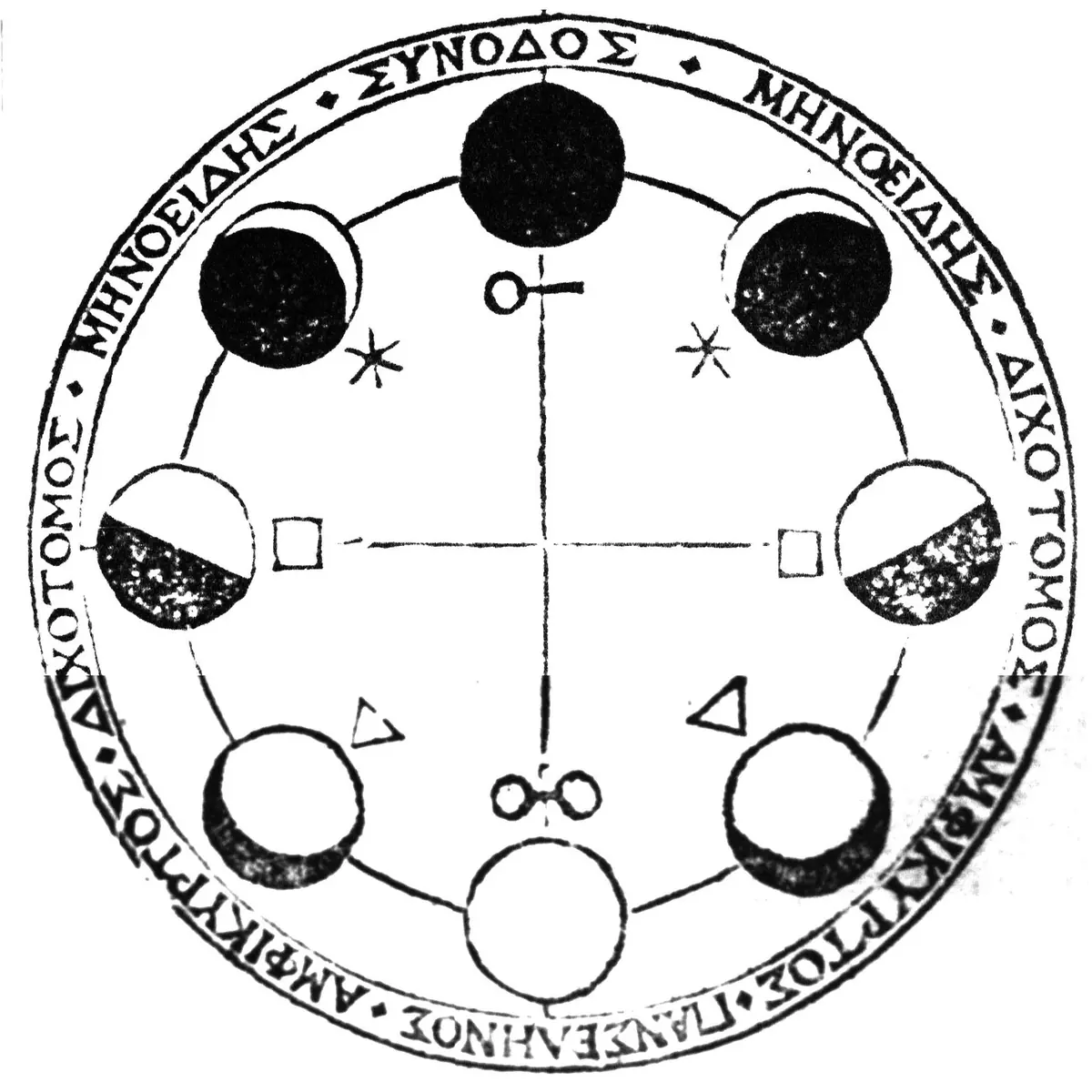
The Moon moves faster than any other body tracked in astrology, completing a full circuit of the zodiac in about 27-28 days — meaning it changes sign roughly every 2 to 3 days. A void-of-course period happens once per sign change, so it recurs on that same roughly-every-2-to-3-days rhythm. How long any individual void period lasts varies a lot: it can be just a few minutes if the Moon’s last aspect happens right before it changes signs, or it can stretch to many hours if that last aspect happens early in the sign and the Moon still has most of that sign left to cross before entering the next one.
What the tradition says to do (and avoid)
The traditional guidance is more specific than a general “things feel off” — it’s tied to the idea that anything begun during a void period is prone to fizzling, going nowhere, or not turning out as planned, because the Moon (traditionally linked to instinct, emotional response, and the immediate moment) isn’t making the kind of forward-moving connections that are read as supporting a fresh start.
- Traditionally discouraged: signing contracts, launching a new project, having a first date, making a major purchase, sending an important email you can’t easily follow up on.
- Traditionally fine, even favored: routine chores, finishing existing work, rest, reflection, and low-stakes activity that doesn’t depend on a specific outcome landing perfectly.
The honest caveat: this is a specific, old piece of folk practice, not a documented outcome. Nothing prevents a contract signed during a void Moon from working out fine, and the tradition itself has never claimed otherwise — it’s offered as a timing preference for people who already find this framework meaningful, not a warning with a track record behind it.
Where this idea comes from
Void of course Moon comes from horary astrology — an older, more technical branch of the tradition focused specifically on answering a yes/no question by reading the sky at the exact moment the question is asked, rather than at a birth. This isn’t a vague old idea with no paper trail — the 17th-century English astrologer William Lilly wrote about it directly in his 1647 textbook Christian Astrology, the single most influential book in the English-language horary tradition:
“All manner of matters goe hardly on (except the principall significators be very strong) when the [Moon] is voyd of course”
— William Lilly, Christian Astrology (1647), p. 122, spelling as printed; the Moon’s symbol is given as [Moon]

In horary practice, a void Moon at the moment a question is asked is traditionally read as a sign that the situation being asked about won’t develop as expected — Lilly’s “hardly on” is the original source of the modern “nothing will come of it” shorthand still used today. The precise technical rule astrologers use to define the cutoff (astrologer and historian Chris Brennan’s summary of the classical method) checks the Moon’s remaining major aspects — conjunction, sextile, square, trine, and opposition — to the other traditional planets before it leaves its current sign; once none remain, the Moon is void until the sign change. The concept has since spread well beyond horary practice into everyday astrology and popular horoscope content, but it has a specific, documented technical origin rather than being a general-purpose modern invention.
Frequently asked questions
How do I find out if the Moon is void of course right now?
You’d need to know the Moon’s exact current sign and the timing of its last aspect before changing signs — information a real ephemeris calculates precisely. This isn’t something Numyra’s calculators currently compute; dedicated astrology software or an ephemeris table is the accurate way to check a specific moment.
Is void of course Moon the same as a New Moon?
No — a New Moon is about the Moon’s angular relationship to the Sun specifically (they’re in the same sign and close together), while void of course is about the Moon’s aspects to all other planets before a sign change. The two can coincide but are separate concepts.
Does void of course Moon affect everyone the same way?
Traditional astrology reads it as a general timing window affecting new beginnings broadly, not something read differently sign-by-sign the way a transit through your own birth chart would be. It’s treated as a shared, universal timing factor.
What’s the difference between void of course and Mercury retrograde?
Both are traditionally read as “pause before proceeding” windows, but they’re unrelated concepts on very different schedules — void of course recurs every 2-3 days and lasts minutes to hours; Mercury retrograde happens 3-4 times a year and lasts about three weeks each time.
Can I still make decisions during a void Moon?
The tradition doesn’t forbid it — it simply frames the timing as less favorable for something new to take root. Whether that matters to you is a matter of how much weight you personally give this specific piece of the tradition.
Sources
- Lilly, William. Christian Astrology. 1647, digital edition. Source of the direct 17th-century quote on void of course above.
- Brennan, Chris. “Defining the Void of Course Moon.” The Astrology Podcast, episode 292. Source for the technical last-aspect rule and horary-astrology origin described above.
- Numyra Methodology Desk. Astrology calculation standard.