Element compatibility is the easy part — the same one-line rule you’ll find in any horoscope column. What actually goes into a real compatibility reading is a second, older layer most explainers skip entirely: the angles between signs, a system that goes back to Ptolemy by name.
Key takeaways
- Element compatibility (Fire/Earth/Air/Water) is the beginner layer — see our Four Elements and Three Modalities guide for that foundation. This article covers the next layer: aspects.
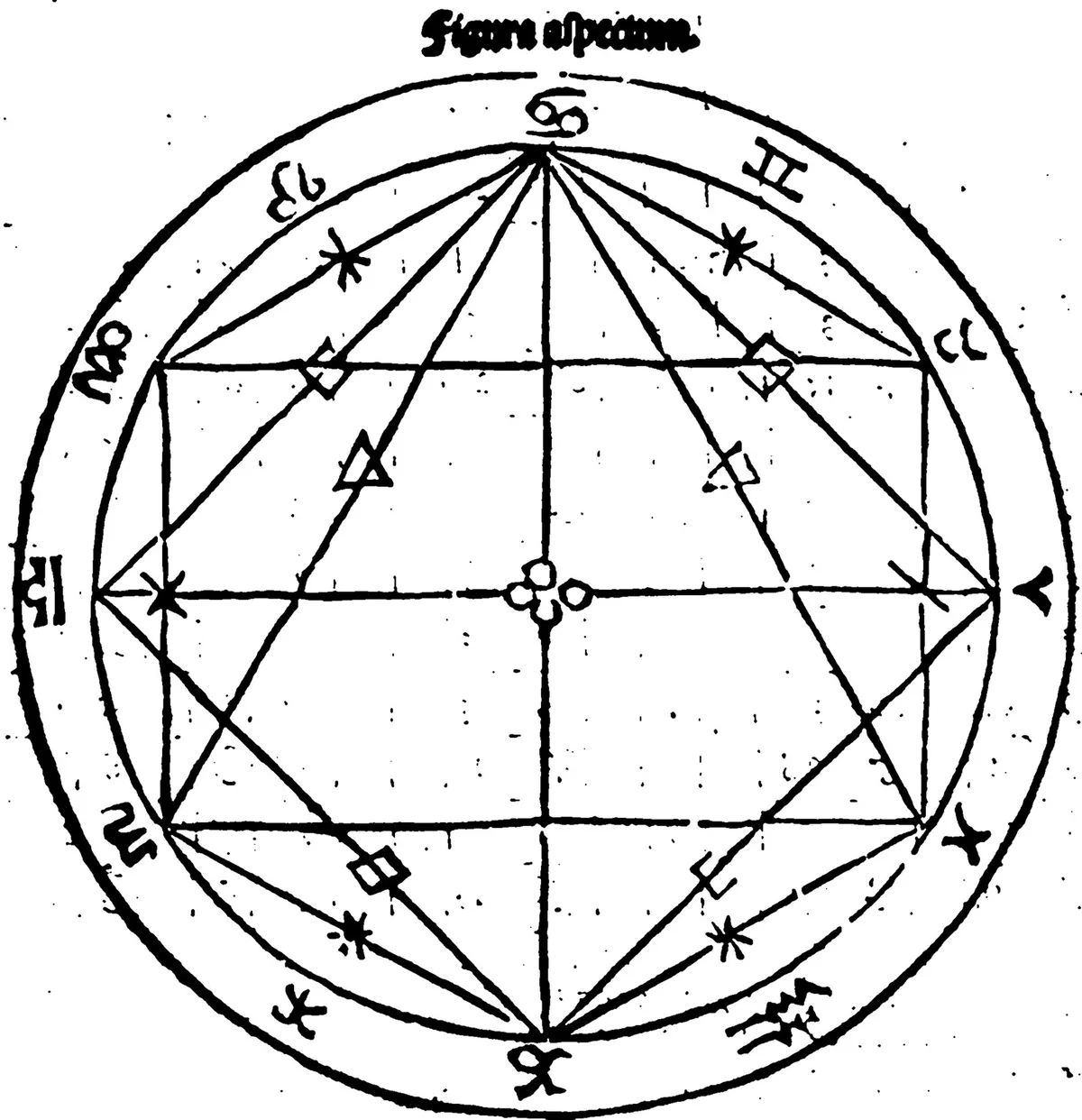
- An “aspect” is the angular distance between two signs around the zodiac wheel. Traditional astrology names five major aspects — conjunction, sextile, square, trine and opposition — and reads each differently.
- Four of them (opposition, trine, square and sextile) appear in Ptolemy’s 2nd-century Tetrabiblos, so they are not a modern invention; the conjunction is not listed in that chapter.
- Trine (same element) and sextile are traditionally read as easy; square (same modality, different element) is read as productive tension; opposition is read as attraction through difference.
- Numyra’s own Zodiac Compatibility calculator deliberately checks element only, not the full aspect picture — here’s the honest reason why, and what a fuller reading actually considers.
- Nothing here is a claim that this framework predicts real-world outcomes — a cultural tradition, presented for reflection and entertainment.
In this guide
- What an “aspect” actually is
- The five major aspects
- Where this system comes from
- A worked example: Leo and Aquarius
- Why Numyra’s own calculator stays simpler
- Frequently asked questions
What an “aspect” actually is
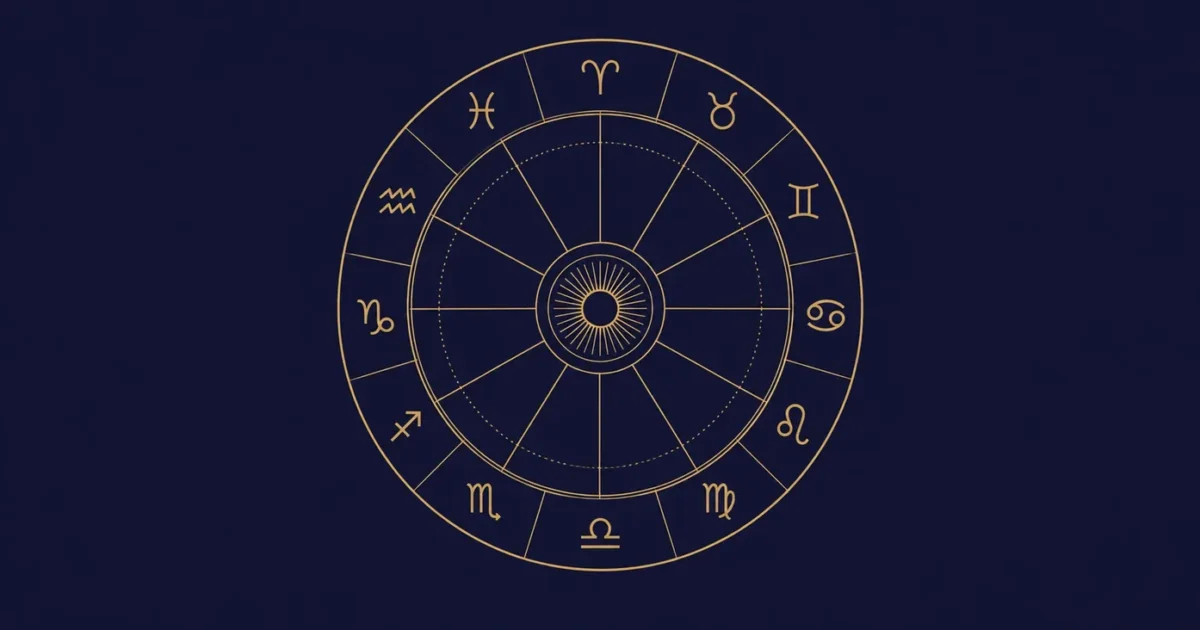
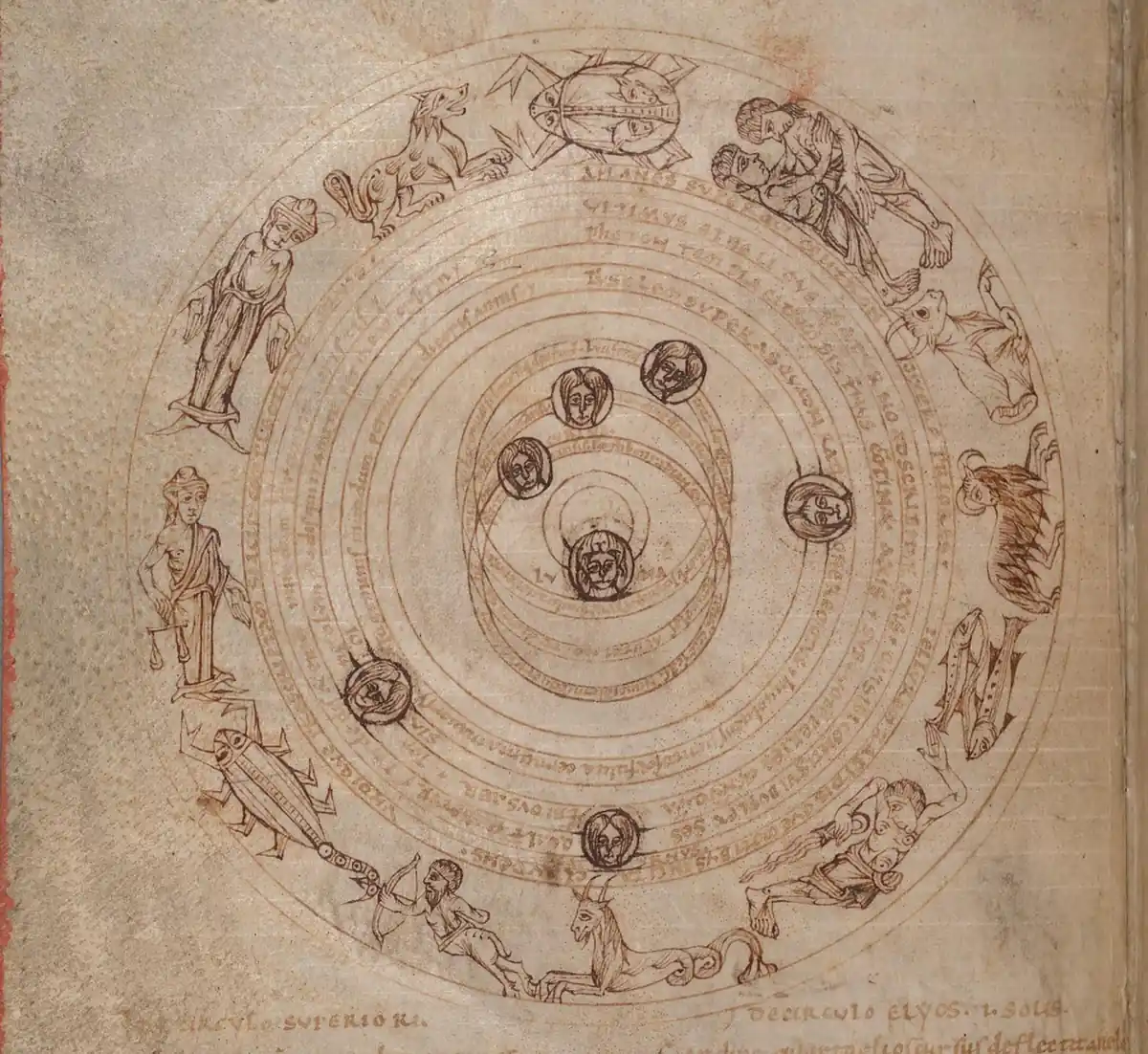
Every zodiac sign occupies a fixed 30° slice of the 360° wheel, in a fixed order: Aries, Taurus, Gemini, Cancer, Leo, Virgo, Libra, Scorpio, Sagittarius, Capricorn, Aquarius, Pisces. The number of signs between any two of them corresponds to a specific angle — and traditional astrology treats specific angles as meaningfully different from others, not just “close” or “far.” That angle is called an aspect, and it’s the actual mechanism behind most real compatibility readings, well beyond the simpler element check most horoscope columns stop at.
The five major aspects
| Aspect | Angle | Signs apart | Traditionally read as |
|---|---|---|---|
| Conjunction | 0° | Same sign | Intensified — same energy, amplified |
| Sextile | 60° | 2 signs | Easy, complementary — different elements that cooperate |
| Square | 90° | 3 signs | Productive tension — same modality, different element |
| Trine | 120° | 4 signs | Easiest — same element |
| Opposition | 180° | 6 signs | Attraction through difference — complementary, not identical |
The “signs apart” column is worth sitting with, because it explains something the element table alone doesn’t: a trine connects three signs that are automatically the same element (Aries-Leo-Sagittarius are all fire, four signs apart from each other every time) — so “trine” and “same element” are really the same fact described two ways. A square, by contrast, connects signs that share a modality — Aries, Cancer, Libra and Capricorn are all cardinal — but sit in four different elements. That’s why square relationships are traditionally read as harder, not easier: both people want to lead (or both want stability, or both want change), just through completely different material.
Where this system comes from
These aren’t modern labels. Ptolemy’s Tetrabiblos — the 2nd-century text that standardized Western astrology, covered in detail in our Tetrabiblos article — names exactly these configurations directly, distinguishing them from angles that carry no special meaning:
“The spaces contained in the configurations above mentioned, viz. the opposition, trine, quartile, and sextile, produce aliquot divisions.”
— Ptolemy, Tetrabiblos, Book I, Chapter XIX (trans. J.M. Ashmand, 1822)
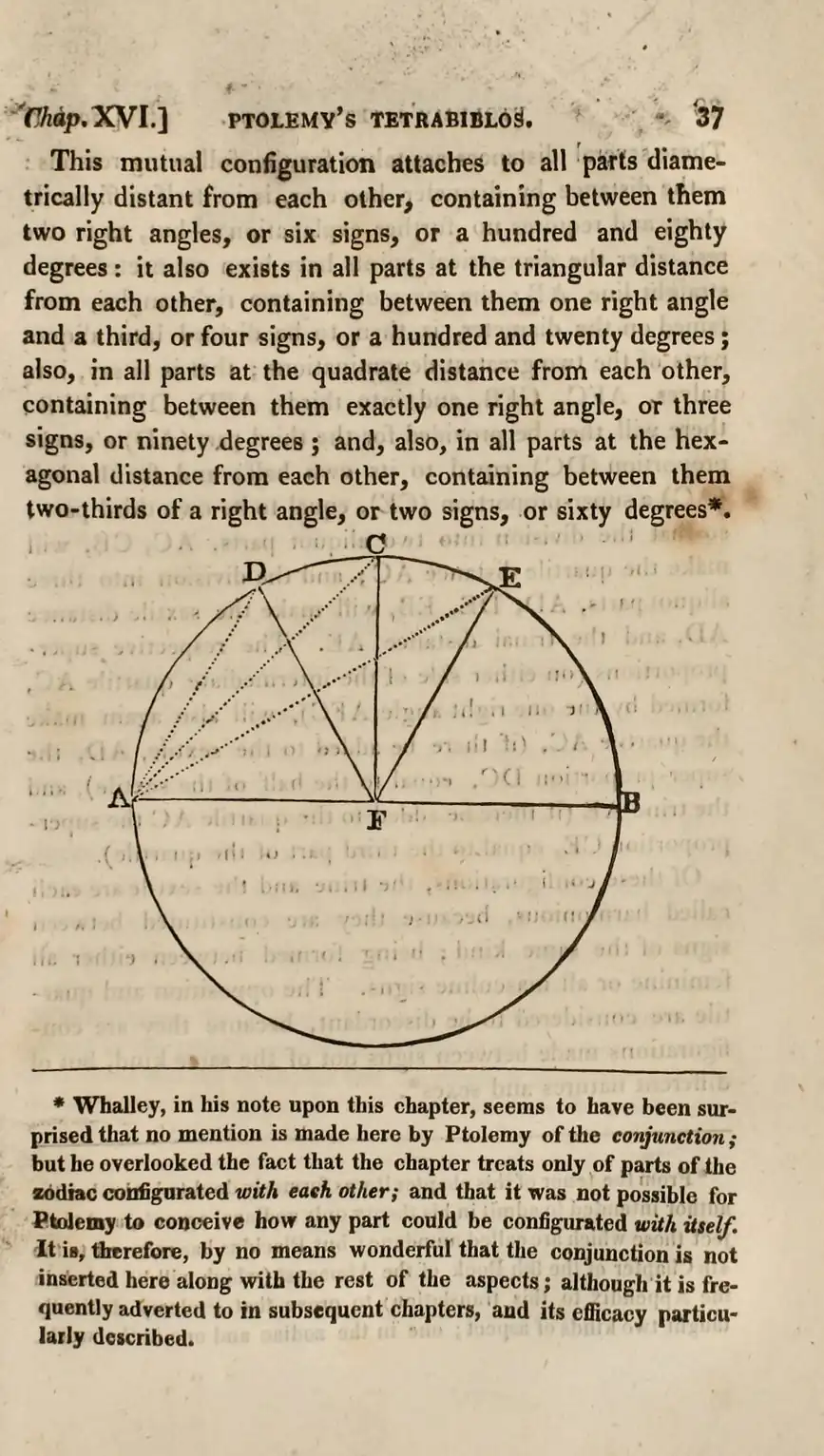
“Quartile” is simply the older name for what’s now almost universally called the square. What’s notable is what Ptolemy explicitly excludes: angles of one sign or five signs apart (“inconjunct,” in his term) get no special reading at all, because they don’t divide the 360° circle into equal whole parts the way 60°, 90°, 120° and 180° do. The system was geometric from the start, not an arbitrary list of favorites.
A worked example: Leo and Aquarius
Numyra’s own Zodiac Compatibility calculator uses Leo and Aquarius as its default example. Here’s what the fuller aspect picture actually says about that specific pair, beyond the calculator’s own element-only result:
- Signs apart: Leo to Aquarius is 6 signs (Leo→Virgo→Libra→Scorpio→Sagittarius→Capricorn→Aquarius) — an opposition, 180°.
- Element: Leo is fire, Aquarius is air — a traditionally complementary pair (fire and air are read as fueling each other), which is exactly what the calculator’s simpler check already returns.
- Modality: both are fixed signs — meaning both are traditionally read as strong-willed and resistant to being talked out of a position once they’ve taken one.
- Put together: an opposition between a fixed fire sign and a fixed air sign is a traditional textbook case of “attraction through difference, tested by two people who each dig in” — genuinely more nuanced than “compatible” or “not,” which is exactly why a full reading looks past element alone.
Why Numyra’s own calculator stays simpler
If aspects add this much, why does Numyra’s calculator only check element? Because a full synastry reading — the real practice of overlaying two people’s complete birth charts, not just their Sun signs — needs the position of every planet in both charts, not just each person’s Sun sign. Reducing that down to “your Sun signs are square” and presenting it as a full compatibility verdict would be exactly the kind of fake precision this site’s own methodology commits to avoiding: a two-Sun-sign comparison can only ever be one layer of a much larger picture, and dressing it up as more than that would overstate what the calculator can honestly know from two birth dates alone.
What the calculator gives you honestly is the single most commonly cited factor — element — clearly labeled as exactly that. This article is the fuller context for readers who want to understand what a real compatibility reading also weighs, without Numyra pretending its own two-input tool computes any of it.
Frequently asked questions
Is a square aspect always bad?
No — traditionally it’s read as productive tension, not doom. Plenty of real relationships (and, in a full chart, most people’s own internal makeup) involve square aspects. It’s read as effort required, not incompatibility.
Why do trine and sextile sound so similar?
Both are traditionally read as “easy” aspects, but trine (120°, same element) is considered the stronger of the two — sextile (60°) connects different-but-cooperative elements (fire-air or earth-water), so the ease comes from complementing rather than matching.
What about the angles that aren’t on this list — like one sign apart?
Ptolemy’s own text calls these “inconjunct” and explicitly treats them as carrying no special aspect meaning, because they don’t divide the 360° circle into an equal whole-number split. Modern astrology sometimes adds a minor aspect here (the “quincunx,” also 150°/five signs apart), but it’s a secondary, more modern addition to Ptolemy’s original core five.
Does Numyra’s calculator use aspects at all?
Not currently — it compares Sun-sign element only, and says so plainly rather than implying it’s doing more. See the section above for why.
Can two people with a “difficult” aspect still be compatible?
Traditional astrology has never claimed otherwise — element and aspect describe a starting temperament, not a verdict. See our Four Elements and Three Modalities guide for how modality (Cardinal/Fixed/Mutable) adds a third, separate layer on top of both.
Sources
- Ptolemy, Claudius. Tetrabiblos, Book I, Chapter XIX. 2nd century CE, trans. J.M. Ashmand, 1822 (LacusCurtius / Project Gutenberg text).
- “Astrological aspect.” Wikipedia. Aspect angles and orb conventions.
- Numyra Methodology Desk. Astrology calculation standard.