Your Sun sign describes a theme. The astrological houses describe where in your actual life that theme plays out — and almost no site explains that different astrologers genuinely disagree on how to draw the house boundaries, or names who’s actually behind each competing method.
Key takeaways
- Houses divide a birth chart into 12 life areas (home, career, relationships, and so on) based on your exact birth time and location — this is why a Sun-sign horoscope and a full birth chart reading are genuinely different things.
- There isn’t one universal way to calculate house boundaries. Whole Sign houses (the oldest, from Hellenistic astrology) and Placidus houses (the most common in modern Western astrology) can place the same planet in different houses for the same birth chart.
- Real historical figures are behind each system — including a genuinely surprising detail: Placidus didn’t invent the “Placidus system,” and a 12th-century source claims Ptolemy was already using the same method 1,500 years earlier.
- Nothing here is medical, financial, legal, or psychological advice — a cultural tradition, presented for reflection.
What a “house” actually is
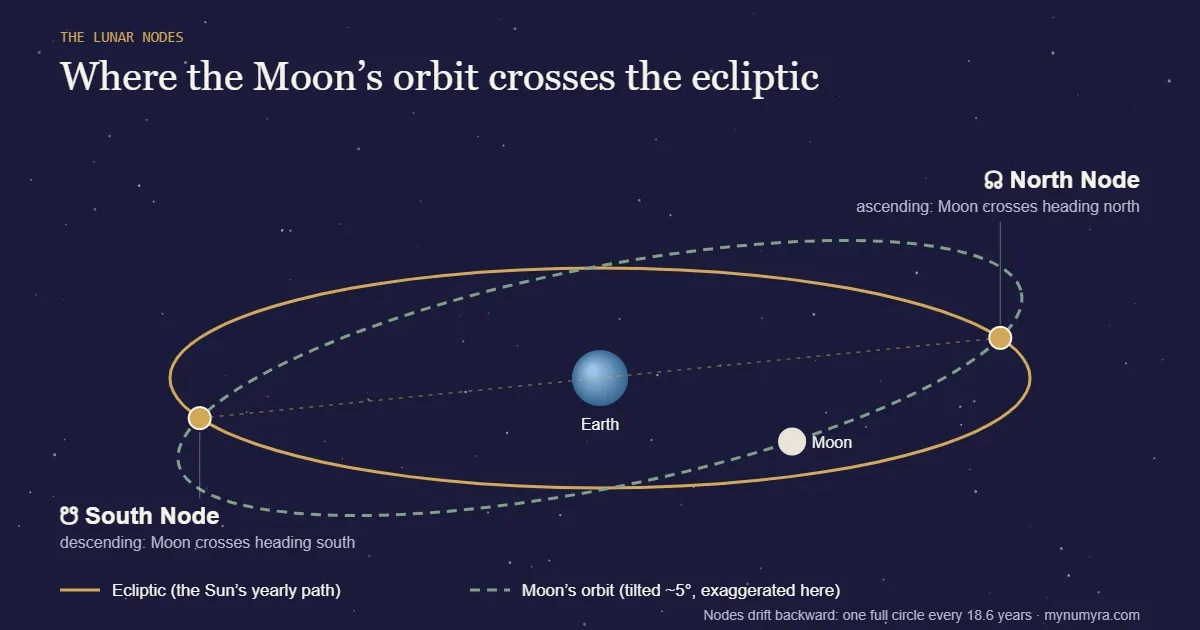
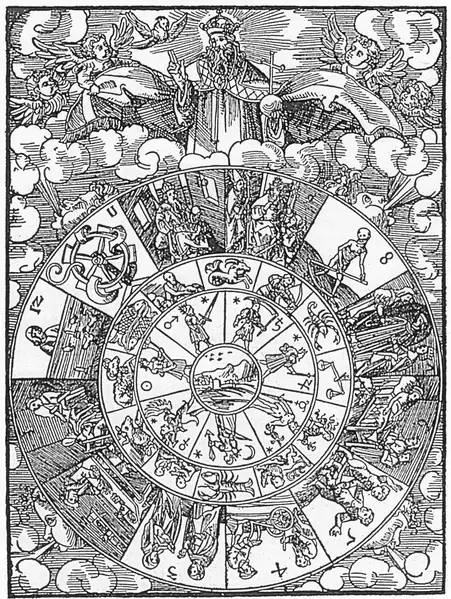
A birth chart maps the sky at the exact moment and place you were born. The houses are a separate layer on top of the zodiac signs: 12 divisions of that chart, each traditionally tied to an area of life — the 1st house to identity and first impressions, the 4th to home and family, the 10th to career and public life, and so on through all 12. Where a planet falls tells you which house’s “department of life” that planet’s traditional meaning is most active in. Calculated points are read the same way: the house your North Node falls in, for example, is read as the area of life where its growth theme plays out.
This is also why houses need more than a birth date: calculating them correctly requires your exact birth time and location, not just the date the way a Sun sign does. The house boundaries shift by roughly one full house every two hours — see our Sun, Moon and Rising sign explainer for why the Rising sign specifically is this time-sensitive.
Two systems, two real histories
Here’s what most house-system explainers skip: there isn’t one agreed method for drawing the 12 house boundaries, and the two most-used systems come from genuinely different eras and different astronomers.
Whole Sign houses — the oldest system
Whole Sign houses is the earliest documented method, used throughout Hellenistic astrology from roughly the 1st century BCE. It’s also the simplest: each house is exactly one full zodiac sign, with no partial-sign splitting. The 2nd-century astrologer Vettius Valens — a younger contemporary of Ptolemy — is among the Hellenistic authors whose surviving writings document this system in use, alongside Dorotheus of Sidon and Firmicus Maternus.
Placidus houses — the modern default, with a real twist
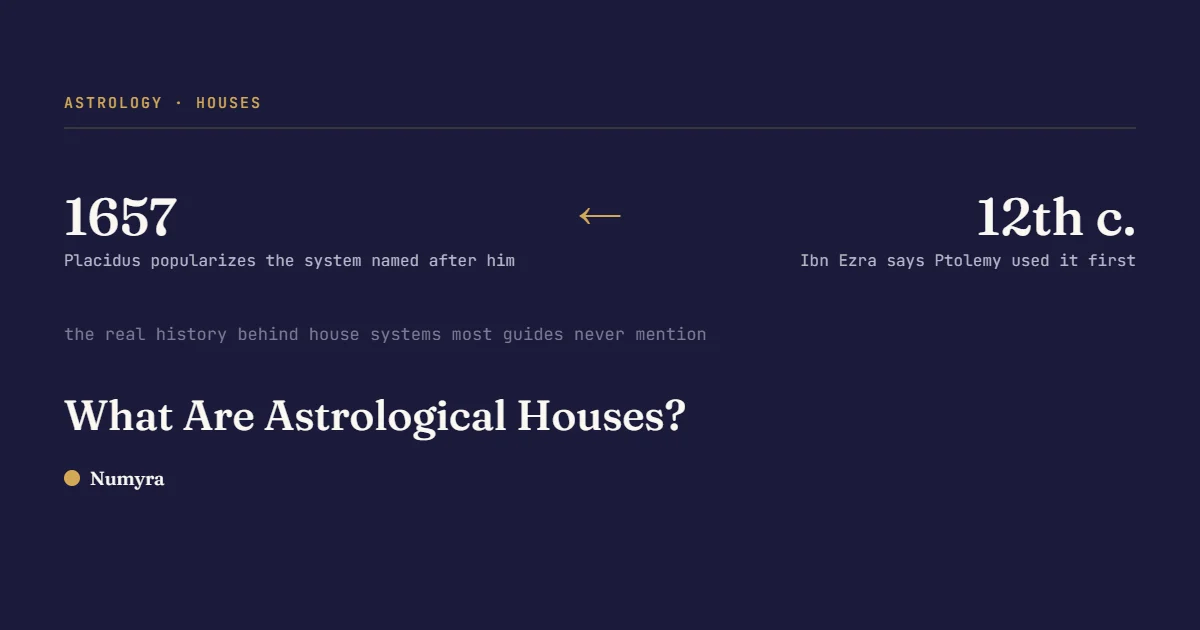
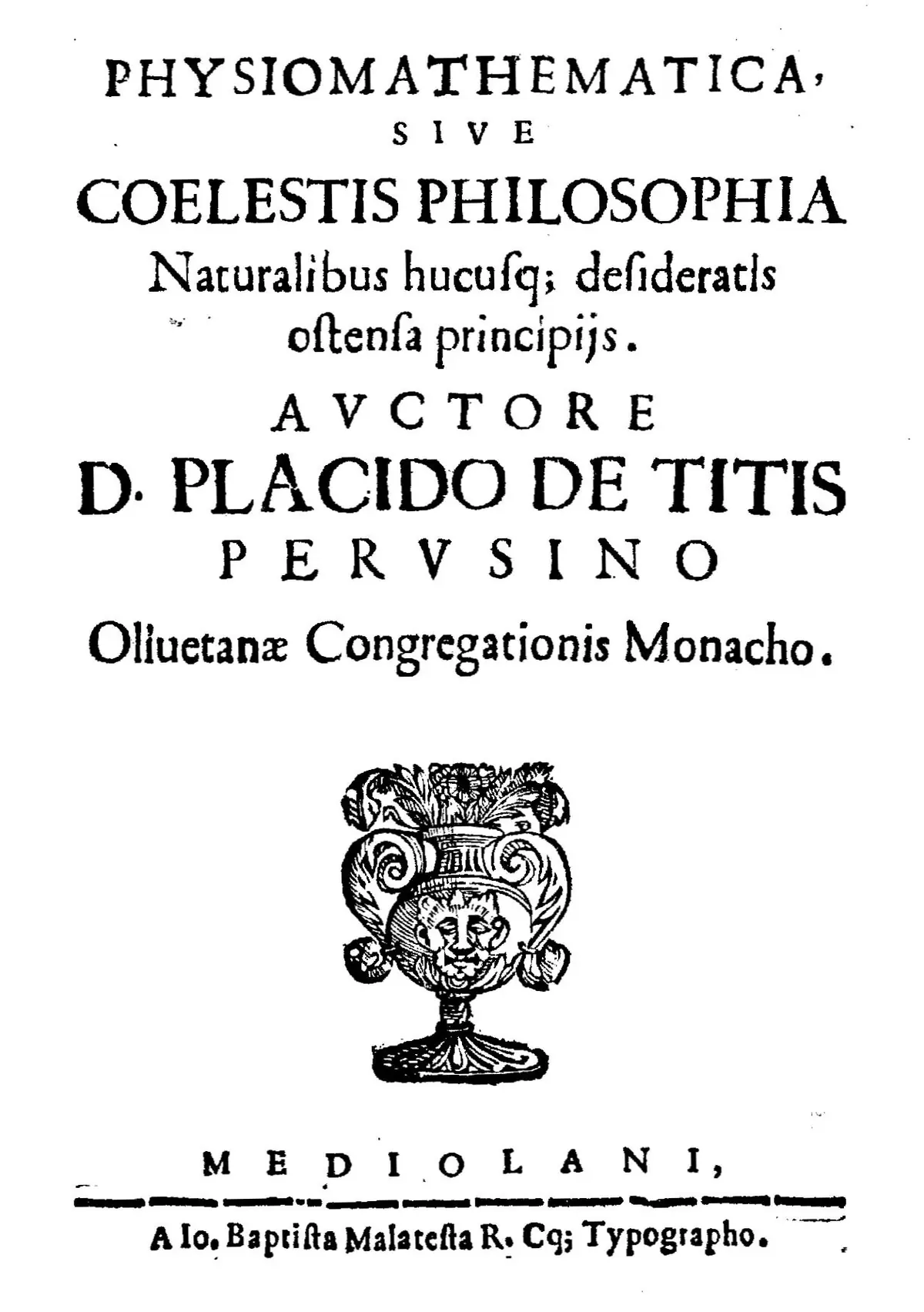
Placidus houses are the most common system in modern Western astrology, and the one Numyra’s own methodology defaults to for the same reason most current software does: it’s the most widely taught and cross-referenced system today. The name comes from Placidus de Titis (1603–1668), an Olivetan monk and professor of mathematics, physics and astronomy at the University of Pavia — but the real history has a genuine twist. Placidus didn’t invent this method. The 12th-century Hebrew astrologer Abraham Ibn Ezra had already described the same technique nearly 500 years earlier, and credited it to Ptolemy himself, over a thousand years before Placidus’s time. Placidus accepted that attribution rather than claiming originality — he popularized a much older method, and his name simply stuck to it. (Ibn Ezra’s own medieval Hebrew text describing this doesn’t have a clean, single-sentence English translation we could verify and quote directly — worth flagging honestly rather than paraphrasing him as if it were a direct quote.)
The two systems, side by side
| Whole Sign | Placidus | |
|---|---|---|
| Era | Hellenistic, c. 1st century BCE | Popularized 1657, but documented centuries earlier |
| How houses divide | Each house = exactly one zodiac sign | Houses divide time, so sizes vary by latitude and birth time |
| Named historical source | Vettius Valens, Dorotheus of Sidon, Firmicus Maternus | Placidus de Titis; attributed to Ptolemy by Abraham Ibn Ezra (12th c.) |
| Used today by | CHANI app, traditional/Hellenistic revival astrologers | Most modern Western software; Numyra’s own future Birth Chart calculator |
Why this genuinely changes a reading
Because Whole Sign keeps each house locked to exactly one sign, and Placidus divides houses by time instead, the same birth chart can place a given planet in a different house depending which system is used — which can shift which “area of life” that planet’s traditional meaning is read against. Neither system is more “correct” in an absolute sense; they’re built on different logic for dividing the same sky, the same way tropical and sidereal zodiacs disagree on where a sign starts for a different, unrelated reason.
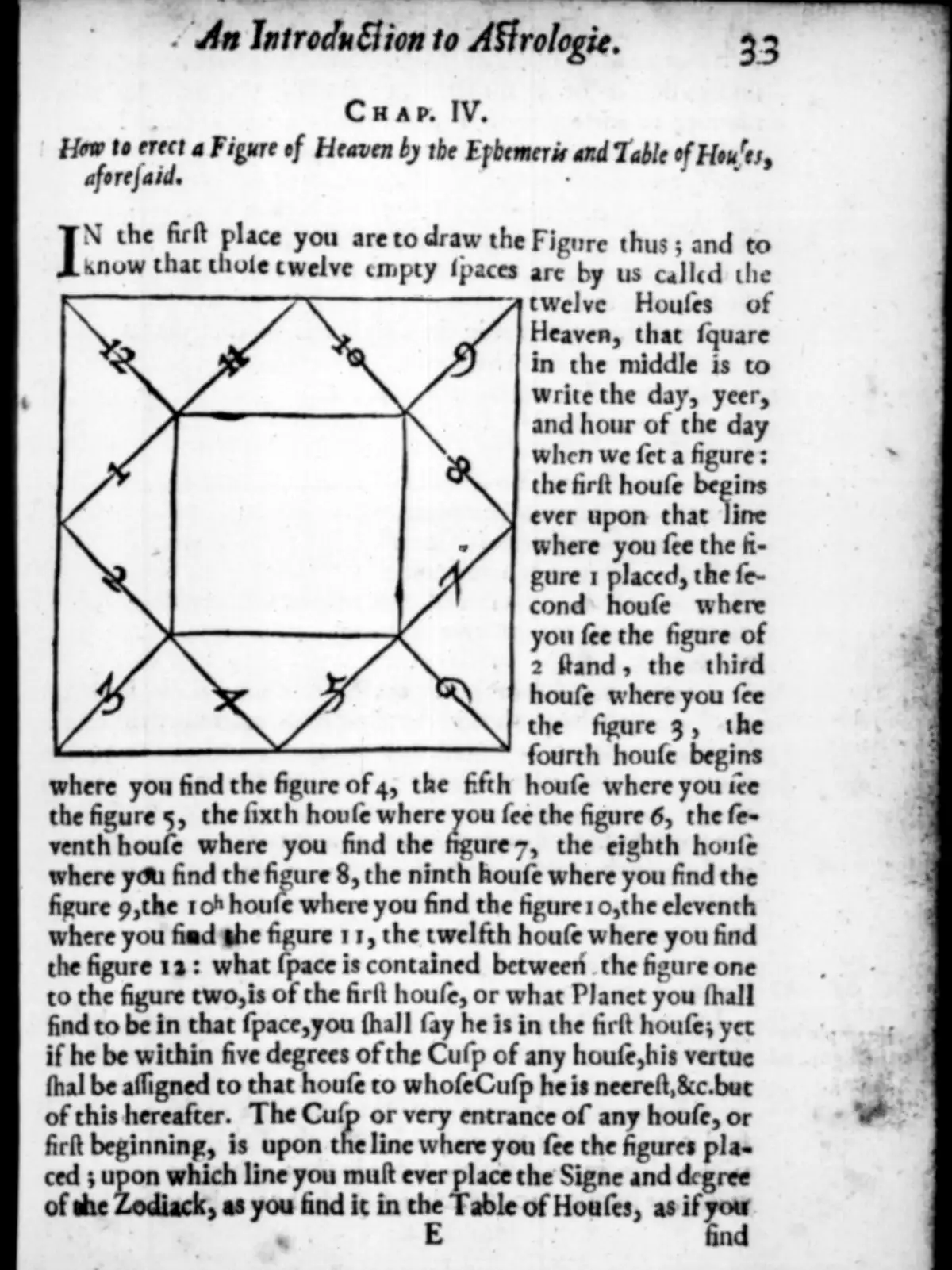
Deciding which side of a boundary a planet belongs on is not a new problem. In 1647 William Lilly, explaining how to read a chart in Christian Astrology, gave a rule for a planet sitting close to the line between two houses:
“if he be within five degrees of the Cusp of any house, his vertue shal be assigned to that house to whose Cusp he is neerest”
— William Lilly, Christian Astrology (1647), p. 33, spelling as printed
Where Numyra stands right now
Our Birth Chart calculator is live and gives your Sun, Moon and rising sign from your birth date, time and place, calculated from published astronomical formulas. It does not place planets in houses yet. When house placements are added, they will use Placidus by default, as stated on our Methodology page, with the historical context above disclosed rather than left as an unstated default the way most calculators present it.
Frequently asked questions
Which house system is “correct”?
Neither is more authoritative — Whole Sign is the older, simpler system; Placidus is the most common in modern Western practice. Different astrologers and different software genuinely default to different ones.
Did Placidus really not invent his own house system?
Correct — the 12th-century astrologer Abraham Ibn Ezra described the same method centuries before Placidus, attributing it to Ptolemy. Placidus popularized the method in the 1600s rather than originating it, and the name simply stayed attached to him.
Why do houses need my exact birth time if my Sun sign doesn’t?
Houses are anchored to the eastern horizon at your exact birth moment and location, which shifts by roughly a full house every two hours — a Sun sign only needs your birth date because it’s based on the Sun’s much slower yearly movement through the zodiac.
Can I calculate my houses without knowing my exact birth time?
Not reliably — without an exact time, house placements (and the Rising sign) can’t be calculated with real confidence. Our own methodology hides house placements entirely rather than guessing when birth time isn’t available.
What do the 12 houses represent?
Each house is traditionally tied to one area of life: the 1st to identity and first impressions, the 4th to home and family, the 7th to partnerships, the 10th to career and public life, and so on around the chart. A planet’s house shows which area of life its meaning is read against.
Can a house in my chart be empty?
Yes, and always at least two are. The ten bodies astrology tracks (the Sun, the Moon, and Mercury through Pluto) spread across twelve houses can never fill all of them. An empty house is not read as an empty area of life; astrologers look at the sign on its cusp and that sign’s ruling planet instead.
Sources
- “Placidus de Titis.” Wikipedia. Biographical details and the Abraham Ibn Ezra / Ptolemy attribution.
- “The 12 Houses in Astrology.” CHANI. One of the few competitor guides that names its own house system explicitly.
- Numyra Methodology Desk. Astrology calculation standard (Placidus houses).